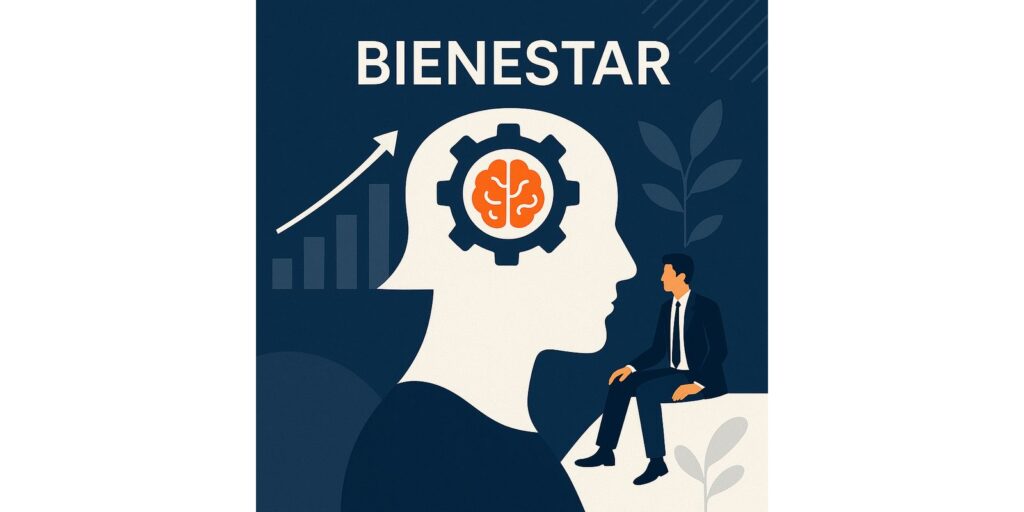
Yesterday I was thinking about how the vision of mental health in the workplace has evolved. What was once a taboo subject or considered a “human resources thing” has now become a strategic priority for any company that really wants to be sustainable and competitive.
And no wonder. According to the World Health Organization, approximately 12 billion work days are lost each year due to depression and anxiety, representing an estimated cost to the global economy of $1 billion per year in lost productivity. Figures we cannot ignore.
Why has mental health become a business priority?
Companies that truly seek to be sustainable and competitive can no longer view team mental health as peripheral. Its impact on productivity, engagement and talent retention is undeniable.
I remember when we started talking about these issues a few years ago and many saw it as an “extra” or just another benefit. Today the reality is different: a bad work environment not only affects team motivation, but is also a key factor in the mental health of employees.
Taking care of mental health within organizations is no longer an option, it is a strategic necessity that directly impacts results.
And this is not just a perception. The data confirms it: companies with effective mental wellness programs report up to 21% more productivity and 41% less absenteeism. Isn't it amazing how something that was once considered “soft” now has such compelling metrics?
5 Practical tools to strengthen mental health in your company
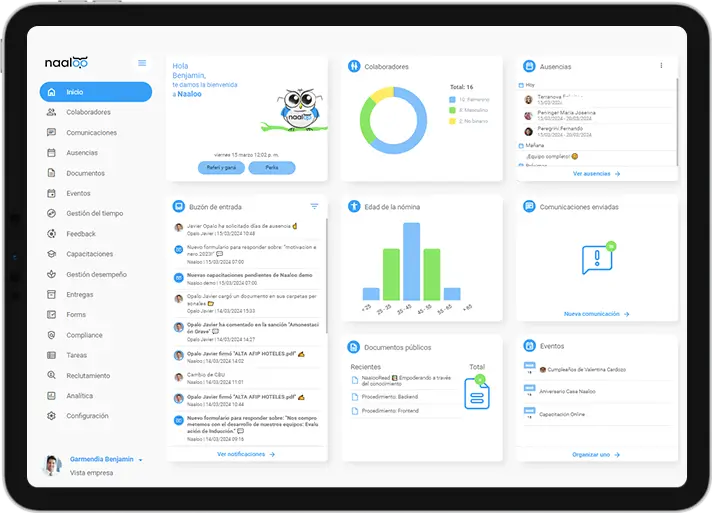
At Naaloo HR, we have seen how SMEs that implement concrete strategies to manage their organizational climate manage to significantly strengthen the well-being of their teams. These are not large investments, but tools designed to measure, detect and act in time.
How do we do it? I'll share with you the strategies we've seen work:
Measuring the work environment
Automated surveys and constant feedback tools make it possible to detect stress levels, satisfaction and psychosocial risks in real time. This helps prevent problems before they impact the mental health of the team.
I am reminded of a technology SME that implemented this system and discovered that 40% of their team was experiencing high levels of stress due to unrealistic deadlines. They adjusted their processes and within three months saw a 35% improvement in wellness metrics.
2. Internal communication channels
A centralized system for information to flow clearly and efficiently reduces uncertainty, improves transparency and prevents labor anxiety problems caused by organizational misalignment.
What a difference it makes when everyone knows where the company is going! I have seen teams completely transform when they implement effective communication channels.
3. Feedback and recognition system
Giving and receiving recognition strengthens the emotional well-being of employees. Recognition reduces stress, increases motivation and improves the sense of belonging within the team.
It's amazing how something as simple as a structured and visible “thank you” can change the dynamic of an entire team.
4. Social Wall (Internal Social Network)
A space to share achievements, news and experiences within the company fosters interaction and a sense of community, helping to reduce emotional disconnection and isolation at work.
Especially in these times of hybrid work, these virtual spaces have become essential to maintain team cohesion.
5. Engagement analysis
Advanced metrics can detect patterns of demotivation, burnout and possible signs of burnout. With this information, leaders can make strategic decisions to improve mental well-being and work climate.
As I always say: what you don't measure, you can't improve. And in mental health issues, measuring early can make all the difference.
| Tool | Main benefit | Mental health impact |
|---|---|---|
| Work environment measurement | Early detection of problems | Prevention of chronic stress |
| Communication channels | Organizational transparency | Reduction of anxiety due to uncertainty |
| Feedback system | Culture of recognition | Increased dopamine and well-being |
| Social wall | Sense of belonging | Combats isolation at work |
| Engagement analysis | Burnout detection | Early crisis intervention |
Complementing these tools with specialized solutions is key. For example, Mental Test Lab offers advanced tools for scientific mental health assessments and report automation, enabling accurate and personalized diagnoses. On the other hand, MTLempresas optimizes talent selection with psychometric testing, ensuring that new hires can align with the company's culture and values.
Yesterday I was talking to an SME manager who said, “I used to think that taking care of my team's mental health was a luxury I couldn't afford. Now I understand that I can't afford not to”.
And he's absolutely right. In a world where talent is the most valuable and scarce resource, taking care of the mental health of our teams is not only the right thing to do, it's the smart thing to do from a business standpoint.
Are you taking real steps to take care of your team's mental health and improve the work environment in your company? I would love to know what strategies you are implementing in your organization and what results you are seeing, share your experience in the comments!